Insurance and Safety for House Removals
When you choose a professional house removals team, safety and insurance are the twin pillars that protect your possessions and the people handling them. Our approach to home removals focuses on preventive planning, comprehensive cover and trained staff so every house move is carried out with care. Public liability insurance sits at the core of any reputable removals operation: it safeguards third parties and property in the rare event of accidental damage during a domestic removals job.Public Liability Insurance Explained
Public liability cover for residential removals provides protection against claims arising from accidental injury or damage to a customer’s property or neighbouring property. Typical policies specify an indemnity limit per incident and include legal costs. For furniture removals and broader residential removals work we recommend reviewing policy limits, excesses and exclusions before any move. This ensures that both the removals company and the customer understand the extent of cover and the claims process. A clear understanding of insurance does not replace safe working practices. Policies vary, so it is standard for professional removal teams to document the insurance they hold and how it applies to each house move. To make responsibility obvious, we display a summary of cover details and keep policy documentation available for inspection before or during domestic removals operations. Typical elements covered include:
- Accidental damage to customer property during loading/unloading
- Third-party injury on-site caused by removal activity
- Legal defence costs associated with covered claims
Staff Training and Competency
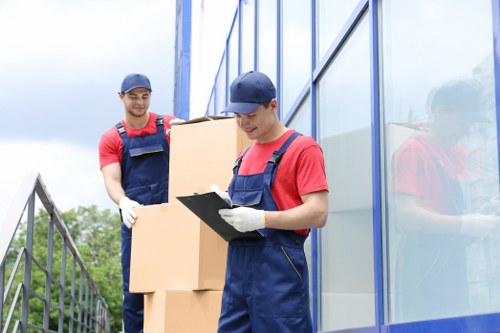
Professional removals depend on competent staff. All team members undergo a formal training program covering safe lifting techniques, handling of fragile items, and vehicle loading best practices. Training is refreshed regularly and complemented by on-the-job mentoring. We assess competency in tasks such as stair carries, tight access manoeuvres and the use of moving equipment to reduce the risk of harm during a move. For complex domestic removals or specialty item relocations, additional specialist instruction is provided. Personal protective equipment (PPE) is a simple, effective layer of protection. Our crews use protective gloves, steel-toe footwear, hi-vis clothing and, where appropriate, dust masks or knee pads. PPE selection is matched to the task: heavy lifts require back support and gloves with enhanced grip, while long-distance moves may require hi-vis and weatherproof layers. We maintain PPE supplies, replace worn items promptly and train staff in proper usage to ensure the safety of the team and the customer’s belongings.
Vehicle and equipment competence is also essential. Routinely serviced removal vans, secure load restraints and the correct use of trolleys and ramps all reduce the chance of incidents. Crews are trained to check vehicle maintenance logs, secure loads to manufacturer standards and verify that lifting aids are in safe working order before every removals job. These measures are part of our broader safety culture for any removals service.
Risk assessment is the structured foundation of safe moving. Prior to every house move we conduct an initial survey (remote or on-site) and then a specific on-site risk assessment before work begins. The assessment identifies hazards such as narrow doorways, staircases, steep drives, limited parking, pets and fragile or high-value items. Each hazard is recorded and assigned control measures in a simple document called a risk assessment and method statement (RAMS) so the removals team and customer share the same expectations.
 Implementing control measures means turning the risk assessment into action: using protective floor coverings, installing corner guards, applying appropriate lifting techniques and employing additional manpower or specialist equipment where needed. For high-risk moves we prepare a bespoke plan covering sequence of handling, protective packaging for antiques or electronics, and contingency arrangements should unexpected obstacles arise. Controls are practical, proportionate and documented to create a safer moving environment for all parties.
![A scene inside a residential home showing two movers from House Removals carrying a medium-sized cardboard moving box. The person on the left is wearing a white shirt and dark blue jeans, while the person on the right is dressed in a green top and white trousers. Several other cardboard boxes are stacked in the background, some sealed and others open, revealing various household items. The room is well-lit with natural light, and a houseplant with large, green leaves is visible on the right side, placed on a grey ottoman. The environment appears to be a comfortable living space, possibly a lounge or hallway, with light- coloured walls. The scene captures the process of packing and moving, typical of house removals services in a suburban area near [POSTCODE], with a focus on careful handling of personal belongings amid organized stacks of boxes and furniture.](/pub/_photos/removals/f1270398976.jpg) Operational checks and continuous improvement complete the process. Before starting a job the team reviews the RAMS, confirms insurance details are appropriate for the task and ensures PPE is worn correctly. We log incidents, near-misses and customer-noted concerns and use that information to adjust training, update risk assessments and improve procedures. This continuous feedback loop ensures that our removals operations remain compliant, resilient and focused on protecting people and property during every house move.
Operational checks and continuous improvement complete the process. Before starting a job the team reviews the RAMS, confirms insurance details are appropriate for the task and ensures PPE is worn correctly. We log incidents, near-misses and customer-noted concerns and use that information to adjust training, update risk assessments and improve procedures. This continuous feedback loop ensures that our removals operations remain compliant, resilient and focused on protecting people and property during every house move.